


How we choose cotton
Staple length, twist, weight and the hand-feel test. Why our tee costs $10.50 in cotton and knitting alone, and why we think that is the right number.
- Published
- 28 Aug 2026
- Reading
- 8 min
- Topic
- Materials
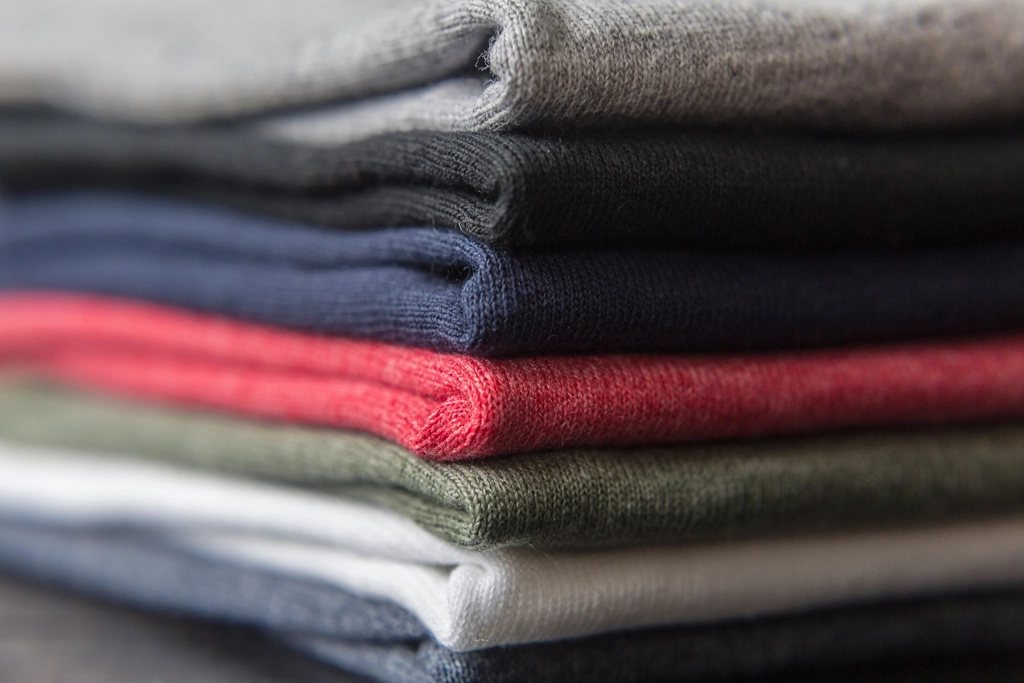
A tee is mostly cotton and air. The less air, the longer it lasts. That is the short version. The long version takes a week in a knitting mill in Porto and about forty swatches.
Long staple, tight twist
Cotton fibres vary in length. Short fibres poke out of the yarn and pill; long fibres lie flat and stay smooth. We buy combed long-staple cotton and ask the spinner for a tighter twist than usual, which makes the yarn slightly harder to knit and much harder to wear out.
You can feel a cheap tee in the shoulder seam. You can feel a good one after the fiftieth wash.
Why 300 grams
Most tees weigh 140 to 180 grams per square metre. Ours is 300. It drapes like a light sweatshirt, holds its shape and doesn't turn see-through at the back after a summer. It also costs nearly twice as much in yarn, which is why it costs $48 and not $25.
- Grams per m²
- 300
- Cotton & knitting
- $10.50
- Swatches tested
- 40
- Washes tested
- 50+
The hand-feel test
After all the lab numbers, the final test is a table, six swatches and three people with their eyes closed. The one everybody reaches for twice wins. It has been the same mill's swatch four years running.
Questions about this story?
Ask the team